Yo: One reason it doesn't suck, completely

There has been a lot of talk about Yo recently. Initially it seems like the talk was all driven by the fact that this seemingly pointless app had raised $1million in angel funding (a good way to generate publicity and hype I guess if you happen to have a milli lying around). A lot of people speculated this as further proof of the tech bubble they had been long predicted. Others just talked about how crappy it was (albeit indirectly)

At a glance, neither the app nor the funding round seem particularly interesting - The app sounds distinctly like a novelty app that has only generated interest (and therefore users) on account of the funding, and seems destined to be a blip in the tech-history books much like Chat Roulette etc (although I can't really see it hitting he heights of Chat Roulette - at least people still make an occasional joke about Chat Roulette - I think give it three months and no one will be talking about Yo). The funding is less interesting when you hear the full story: according to Forbes, the app was created by a chap called Or Abel, after his former boss, Moshe Hogeg apparently asked him to make the app so he could buzz his PA without having to call, when Or Abel then switched up the idea a little bit Moshe lead the funding round (so a guy invested in what was basically his own idea, probably wasn't the world's hardest pitch).

Context based messaging

One reason cited for the app not being that lame, is apparently that it is actually trying to fill in a gap - providing context-based-messaging e.g. when you ping someone a "yo" they know the context of the message so you don't need to know anything else.

I don't agree. At least with the examples cited so far, it still seems pretty lame. The main example that has been used is the World Cup - you could subscribe to WORLDCUP by yo-ing them and then you will get a "yo" back everytime a goal is scored. Which honestly doesn't sound that great. I have been following the WC pretty avidly, but getting intermittent messages saying someone scored doesn't sound useful, and the main problem is that I would then have to launch another app to actually get the context (e.g. which team scored).  There are lots of other solutions to this that provide simple notifications including the context.


Some other examples:

Wanna say "good morning"? just Yo. 
Wanna say "Baby I'm thinking about you"? -- Yo. 
"I've finished my meeting, come by my office" -- Yo. 
"Are you up?" -- Yo.

These all make sense, but what next? How do you continue the conversation? how do you confirm/agree that all important context of the message? All these simple "yo"s all drive users to other apps - which means more effort/taps so why bother starting the conversation in Yo at all? why not just use WhatsApp/SMS/Facebook/GChat/etc from the start?


Ok, so clearly Context-Free messaging is a bad idea..

However, in my opinion, there is a glimmer of hope for the app, but the question for me is really just does it have enough runway to execute it before it just becomes another novelty app in the history books.

A few years back, just before Twitter went all dick-ish with their API and started locking out the entire developer community and third party eco-system there was a few good articles discussing an alternative business model for Twitter, and rather than becoming a media company (that it has become, rich content including pics/videos & trying to drive all eyeballs onto twitter.com or official apps - not via third party clients) it should become a global messaging system - it had the infrastructure made to be a massive pub-sub/notification system (I think at the time there was a better article that I read, but can't find the link now, so that one will have to do - if anyone thinks they know the one I mean then please add to the comments!).
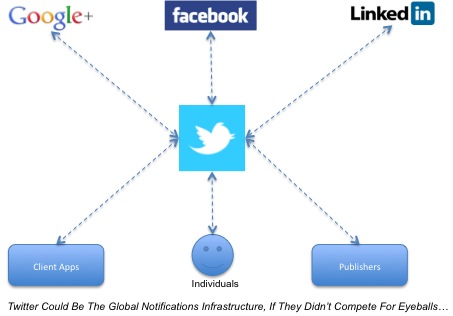

This is a space that I think Yo could step up and fill. And its possible that they are thinking the same - having already announced their API, they already suggest some simple notification systems that could utilise it - In which case, it could become a really interesting platform.


So who knows, there is potential for it to become something pretty neat. Odds are on it will just end up a passing gimmick though.


The Idiot Box: Disrupting TV

There has been a lot written in recent months about the changing role of content on the web and devices, particularly recently with Apple's acquisition of Beats (things just aint the same for gangsters) - and Benedict Evans recently wrote questioning whether content is actually still king. And I think we can agree he makes a good point, when it comes to music, it is no longer a USP, its just expected. Between YouTube, SoundCloud, Spotify, Google's Play services etc there is no reason people can't just stream any music they like, fairly seamlessly, and switch between providers/apps just as easily.  Apple had invested massively in iTunes, but the iTunes buy-download model isn't what people want any more (hence buying Beats, actually for their streaming service maybe).


A more interesting area is Television - content is still a key factor, NetFlix, Amazon Instant(formerly LoveFilm) etc are largely compared entirely based on their content - as a service there is little between them, other than content.  So really it's no suprise to see all the normal big players getting involved in the market Google (ChromeCast etc), Amazon Instant, Apple TV.

Within 5years I think we will see a massive shift in viewing patterns, with pretty much all new TVs sold today being web-enabled I think its an inevitability that people will move to all on-demand services rather than being dependent on scheduled programming. Within a further 5years I wouldn't be surprised if scheduled programming was all but dead and gone.

We recently bought a NowTV box - at just £10 its a pretty low barrier to web-enabling your TV - and we have pretty much switched over to entirely on-demand service - despite having a PVR we still go for the on demand options.


I think there will be some interesting things that come from this:

Platform Fragmentation

I think this is the biggest problem facing the market at the moment, and to me looks like a massive opportunity. At the moment there is so much fragmentation across the platform: Playstations, Xbox, Android, iOS, TVs (Sony, Samsung, etc) - all have their own platforms, and any on-demand service that wants to offer an app on every platform needs work from either the platform owners or the service providers - if its the platform owner then the provider looses control of UI/UX app features and consistency across platforms, and if its the service provider then they have a lot of work to do to support the different platforms, and they will inevitably have to make decisions whether or not to bother with each platform.

At the moment, in the UK, if you buy a web-enabled device then you can't guarantee that it will have the basic UK free-to-air OD services (BBC, ITV, Channel4, Channel5) - When I bought the NowTV it didn't have Channel4 apps and still doesn't have ITV (and that's a platform backed by BSkyB, which is a fairly large organisation and platform). There are already some Sony TVs that are no longer supported and provider apps are no longer being developed/maintained/supported. 

Android and iOS aside, all platforms will suffer this problem - that is until someone comes with a platform standard/OS that is open and can be re-used across devices. And given Android's prevalence, and Google's investment in TV it would seem like the best placed candidate to tackle that, but let's see!


What is driving creation production?

With scheduled TV there are quiet times, early hours of the morning, working week daytime - and content is created for that specifically. Providers have to each fill their schedules for these hours, so these are commissioned/bought/run.  However, if scheduling was to end, and it was all on-demand then would people still make this content? I'm sure there will still be a demand for some of this content, but people who watch it just because its on will obviously diminish. Students in the UK have had a tradition of watching daytime TV, whether it be Countdown, Diagnosis Murder or Quincy - but in the era of on-demand why would they search out this content? 


Ideas

So this is just a quick note on some things that I am personally finding really interesting right now

Education 

as mentioned, I think this is going to be cracked soon, and maybe Khan academy will do it. Either way, I think whoever does it would need to be a "full stack" startup. I have thought about trying some things - like a GitHub type system for open-sourcing education materials and resources, creating open-standards for curriculum and educational texts etc - but they have always just been tools or things around the periphery. I don't think I have the resources right now to be thinking full stack!


Android first

Android is the most pervasive mobile OS (yes, there are some caveats about the stats, such as numbers coming from China, and the value of the customer compared to other iOS), and Google continue to widen their reach (recently purchasing Nest etc) I think we are going to seeing our first truly Android first apps. If Instagram was built today, would it be iOS first? Probably, but I think that landscape is changing. I think coupled with the following areas this could be a big one.  If I'm building a mobile app it's going to be Android first. Silicon valley is under-invested in Android - There is also growing appetite for it:


Smartphone as your social graph

I have mentioned this one a few times here. Smartphone usage is continuing to increase (even whilst tablet sales falter) and more and more existing mobile users across the world upgrade. Further to this, your smartphone is really where you social graph is. Your address book has your contacts in it, your phone number gives you a unique identifier, and as WhatsApp proved, it gives great power to mobile first startups to disrupt the social network incumbents. It could be argued that Google+ was never going to succeed to usurp Facebook as king of the social networks because people are lazy, and essentially creatures of habbit - if all your friends are on Facebook, why try to convince your entire network to switch to g+? But the smartphone takes away that power, as your network is on your device, not a particular platform.  Couple that with the fact that so many use their phones to double up as cameras it now means most of our photos/videos are also on the device.

Television

I was recently talking with some colleagues about the future of TV and I speculated that in 5-10 years we may see the end of scheduled television, and everything will be only on demand. This would leave some interesting questions/problems:

  • One big problem as I see it is the fragmentation of device software - if you are creating an on demand app, you need to think about Android, iOS, browsers, Xbox, PS, not to mention all the TV manufacturers that have their own software running on their web enabled TV. This means at the moment, if you buy a new web enabled TV or set top box, the on demand apps may not be available, and may not be consistent. I think this could be a good market for Android and wouldn't be surprised if they do make some bold moves in this area (yes, bolder than Chrome Cast) - I would think it would make sense for them to be linking up with TV manufacturers to as the de-facto TV OS (would benefit from android app eco system - even if it would mean a LOT more work for app developers to fix up for another range of screen sizes
  • Another interesting implication of such a switch would be would we see a decline in produced content. At the moment there is a lot of content created specifically for quieter times of the viewing schedule (mon-fri afternoons, early morning, etc) - what might be considered as "filler", but we might see a decline in this as consumers will have complete control of what they want to watch, and there won't be any watch it because its on mentality.
I think its an interesting areas where battles are really going strong, with big players in the content production/distribution space (Netflix/Amazon/YouTube) as well as Google/Apple etc taking on the incumbents in hardware.  I just today saw a link for a site called Glass that is dedicated to ongoing conversation about this topic.

Sal Khan has changed my mind

This lecture is great - It's by Sal Khan from Khan Academy - and Sal talks about how Khan Academy started up and some of its goals.

I had previously started writing an article about the current raft of tech-education startups (Khan Academy, Udacity, Coursera, etc) and how I didn't think they were really in a place to disrupt education in the UK/US. I thought they were great in providing the lectures/materials to everyone with a web connection, but didn't see how they were going to change education systems here.

I thought they were all focused on providing a tech solution, and I didn't really think that a technology could replace human lead education, and without the personal engagement and stimulation to encourage individual learning it would inevitably lead to distraction and local optima in knowledge - but the things that Khan Academy are doing with schools are really exciting.

Well worth a listen.

VR & Oculus - What it means to fulfill its promise

I was listening to the a16z podcast on my commute this morning - Chris Dixon, Balaji Srinivasan & Gil Shafir were discussing Oculus Rift and VR in general.

They are all big believers in VR and believe that it will be a pervasive technology in (something like) 5 years or so - and will be another element of mobile computing. They made some interesting observations about how it might affect entertainment, movies (you could watch the movie from inside each scene, so could move around and explore them/the characters etc), holidaying/virtual tourism (get home from work and have a beer whilst sitting on a beach in Italy for half an hour) as well as the more boring/obvious usage of remote working (business deals/travel).


Anyway, a few of the points made and general concepts started me thinking:

Gaming would be to intense for a lot of the current games Chris Dixon argued that pretty much all the war/shooting/fighting games would be too intense to be played in VR, that driving games would likely be about the limit of intensity that people could cope with, and that VR will be so realistic/engaging that it would be too stressful to actually play some of the modern shooters available on current gaming platforms.


I have not used VR (other than the above, which is a different, probably superior, kind of VR). What is really interesting is that these guys who have had a chance to use Oculus believe that VR will, in the very near future, be so immersive, engaging & realistic that people won't be able to game in the casual way people do today (e.g. relax at home by killing hoards of people/zombies/nazis etc) because it won't be something that you can disconnect from, and actually being in a VR setting and having people shooting at you. Although there will inevitably be games that try FPS in VR, so maybe we will be seeing gamers with PTSD in 10 years?

The point I took away from this is that they believe VR is not something that will just take time for us to adjust to. That people won't adjust to VR and distinguish that it is virtual (obviously, they will know they are in VR, but sub-consciously the experiences of being shot at/attacked etc will stay with them as real, potentially traumatic, experiences). If this stands to be true then it will really add weight to concerns that violence in games leads to real world violence (which at the moment, most people consider to be rubbish).


It will be used for training/practice where normally it is prohibitive (too expensive, not possible).  Training surgeons - learning surgery is not something where you really have test runs. Training military/police in high-stress/conflict situations - they say (as I could imagine) nothing prepares you for conflict - having to make a split-second decision whether to use a weapon in any situation is something I guess you can't really prepare for.  This also suggests there is truth in the previous point - if VR really can prepare armed forces/law enforcement for coping with high stress situations (split second use of weapon decisions) then the brain would have to, on some level, identify VR experiences as real.  Currently, playing shooting games, or using firing ranges can't help prepare for these kind of experiences, as the brain recognizes that these are not reality.


Basically, for the state of VR to be a game changer, it needs to be (subconsciously at least) in-distinguishable from reality. Which itself leads to a whole host of other ethical/moral/philosophical questions and challenges.


However, these are just my opinions on their opinions! Its still too early to know exactly how powerful this new medium might be, so we will have to see how and what develops.


Building a Twitter style autocomplete for Android

I have recently been working on an android app and found myself needing a Twitter style input box that allowed certain words to be looked up using an API driven autocomplete but also supporting freetext (if you have used the compose tweet input on android, like this - free text, but if you type @ then you get a user name autocomplete).


I google'd for a while, and stumbled through a few StackOverflow answers but none of there were 100% clear, and further more, just copy-pasting the code into a dummy project I was working in didn't work. So here is a break down of the what and how this works.

There are four main components:

The XML Layout: MultiAutoCompleteTextView


This is simple - just add the MultiAutoCompleteTextView just like you would any input. The only point of interest here is the "completionThreshold" - this is just the number of characters that have to be typed before auto-complete kicks in. We have set this to one char so it kicks in early.


We then just setup the auto-complete in our Activity onCreate

SetTokeniser: UsernameTokenizer

This is a custom class that implements the Tokenizer interface. This will be used by our autocomplete imput box to work out whether or not it should be displaying a dropdown menu. If you are using a static list for lookups (countries, fixed codes from your app, etc) then this is the only thing you really need to do - then you can just set the fields ArrayAdapter as the list of Strings etc and it will automatically kick in.

In our case, we are using the @ character to identify the start of pieces of text that should be lookedup and spaces to determine the end of the look up token.


The three methods are relatively straight forward - and will drive when your app presents the drop down:
  • terminateToken(CharSequence text) - this basically just provides a presentable version of our token with a proper terminator at the end (e.g. makes sure a trailing single space in this case)
  • findTokenStart(CharSequence text, int cursor) - Just finds the position of the start of the token. It does this by iterating backwards through the provided CharSequence (the text input in the input box) starting from the position of the cursor, which is just the position of the last character edited (this means if you go back and edit text in the middle of a block it still finds the correct token).  If no valid token start is found (e.g. we go backwards and we can't find a @ character) then the current position is returned - no dropdown is displayed.
  • findTokenEnd(CharSequence text, int cursor) - As above, but finds the end position. Iterates forward until a token terminator (in our case a space) or the end of the text is found

As long as you implement these to support your token identification pattern then you will get a dropdown appearing appropriately.


Adding a text changed listener

For ease of use on this one, I have just set the activity to implement the TextWatcher interface - the reason for this is just convenience - the implementation is going to handle calling our API asyncronously, so it is easier if it has the activity context.

There are three methods that need to be implemented - four our case there will be two no-op methods and just one implementation:


The method onTextChanged is implemented - unfortunately the tokenizer will only indicate to the application when to display the dropdown - it doesn't actually call the API, so we have to slightly repeat ourselves here in handling the API invocation.  In this method we need to again check for and find the relevant valid token in the input, and if a valid token found, then pass it to our API to lookup the dataset.

To help with that, I also added some additional methods to help check for the existence of a valid token (reading them should be self explanatory, but comments included inline)


In this case, as it was just an experiment, and I didn't actually have a user lookup API I have just used the LinkedIn skills API (this code also taken in part from a StackOverflow answer).

The Async task should also be straight forward, and can be implemented in whatever pattern you are using for Async calls - but the key point to note is how we are updating our dropdown list.


The API driven, multi-autocomplete/free text field should then be working as expected